Shortcut to Content

Memorial Hall

Patriotic Martyr Maeheon Yun Bong-gil

Exhibition Hall 1

Exhibition Hall 1

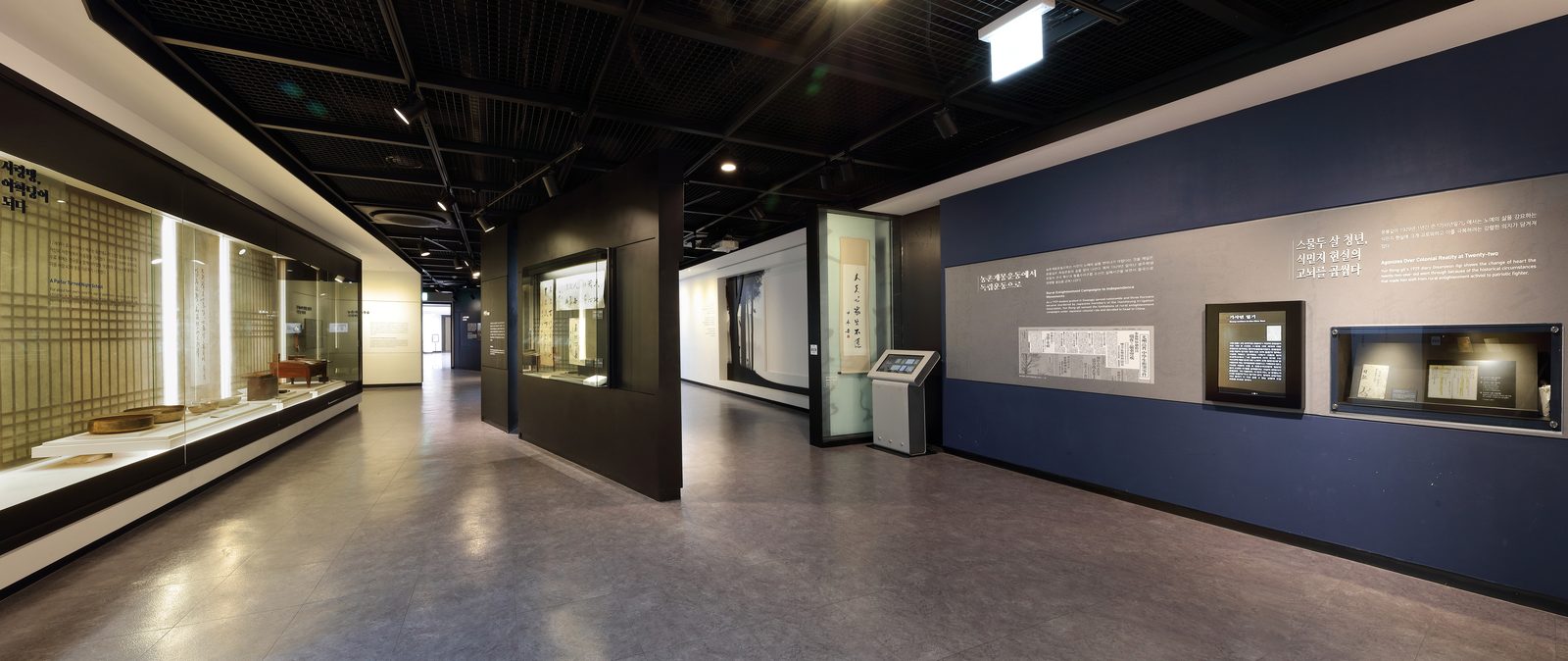
Exhibition Hall 1 covers the period from Yun Bong-gil's birth and growth to his life in Qingdao, China.

At the entrance, the digital chronology unfolds his major achievements year by year through themed visual displays, honoring his commitment to righteousness, freedom, and peace.

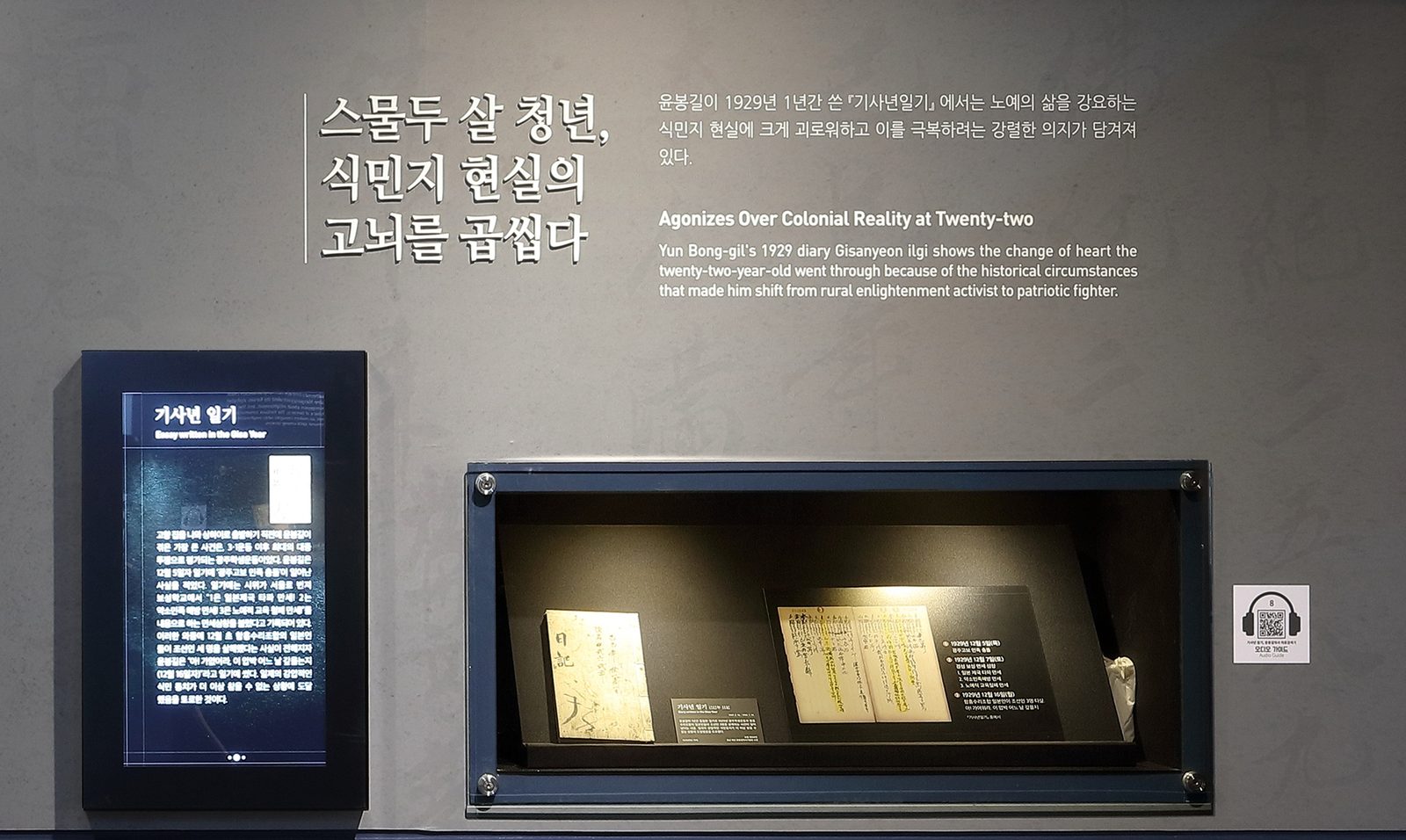
The digital panels introduce Yun Bong-gil's major works, including his collections of classical Chinese poetry; Nongmindokbon, the farmers' primer he compiled for rural enlightenment; Diary written in the Gisa Year (1929), which records his daily life; and key excerpts from the many letters he wrote after going into exile.

At Buheungwon School, visitors can browse and print all 334 classical Chinese poems written by Yun Bong-gil using the Classical Chinese Poetry Table.

Key Exhibition Items

1
Digital Chronology

An interactive digital timeline that unfolds Yun Bong-gil's major achievements year by year through themed visual displays.

2
Buheungwon School

An interactive experience zone where visitors can browse and print all 334 classical Chinese poems written by Yun Bong-gil using the Classical Chinese Poetry Table.

Featured Artifacts and Works

Hansijip

Yun Bong-gil left several collections of classical Chinese poetry, including Yeomnak, Hansijip, Imchu, Myeongchu, and Octa. These works feature poems by renowned Chinese sages, as well as Yun Bong-gil's own compositions—both seven-character and five-character regulated verses—along with beautifully crafted letters and poetic writings.

Nongmindokbon (Farmers' Primer)

Compiled in 1927 as a textbook for night-school students, this farmers' primer survives today in three volumes. They—Volume 1: "Joseongeul (Korean Writing)," Volume 2: "Gyemong (Enlightenment)," and Volume 3: "Nongmin (The Future Path for Farmers)"—contain lessons on the Korean alphabet Hangeul, traditional virtues and cultural refinement, the ideals of equality and freedom, currents of modern civilization, and the agrarian and communal spirit essential to rural society.

Diary Written in the Gisa Year

Beginning on Lunar New Year's Day in 1929 (the Gisa Year), Yun Bong-gil kept a handwritten diary documenting his daily life and the activities of the rural enlightenment movement. In this year-long journal, he lamented the intensifying oppression of Japanese colonial rule—citing the 1929 Gwangju Student Independence Movement and the killing of three Koreans by Japanese members of the Hamheung Irrigation Association—and revealed that these events strengthened his resolve to go into exile in Shanghai.

Jangbuchulga Saengbulhwan (丈夫出家生不還)
"Once a brave young man filled with aspirations leaves his home, he will never return until he has achieved his goals."

This phrase was written by Yun Bong-gil on March 6, 1930, as he departed for China with a firm resolve to dedicate his life to the independence movement.

Yun's Letter to His Family

Six letters remain—addressed to his mother, his son Mosun (childhood name of Jong), and his younger brother Yeong-seok (childhood name of Nam-ui). To his mother, he expressed that he had chosen the "path of steadfast and righteous love" over familial comfort; to his son, he urged diligence and virtue according to his mother's teachings; and to his younger brother, he entrusted the care of family affairs.